

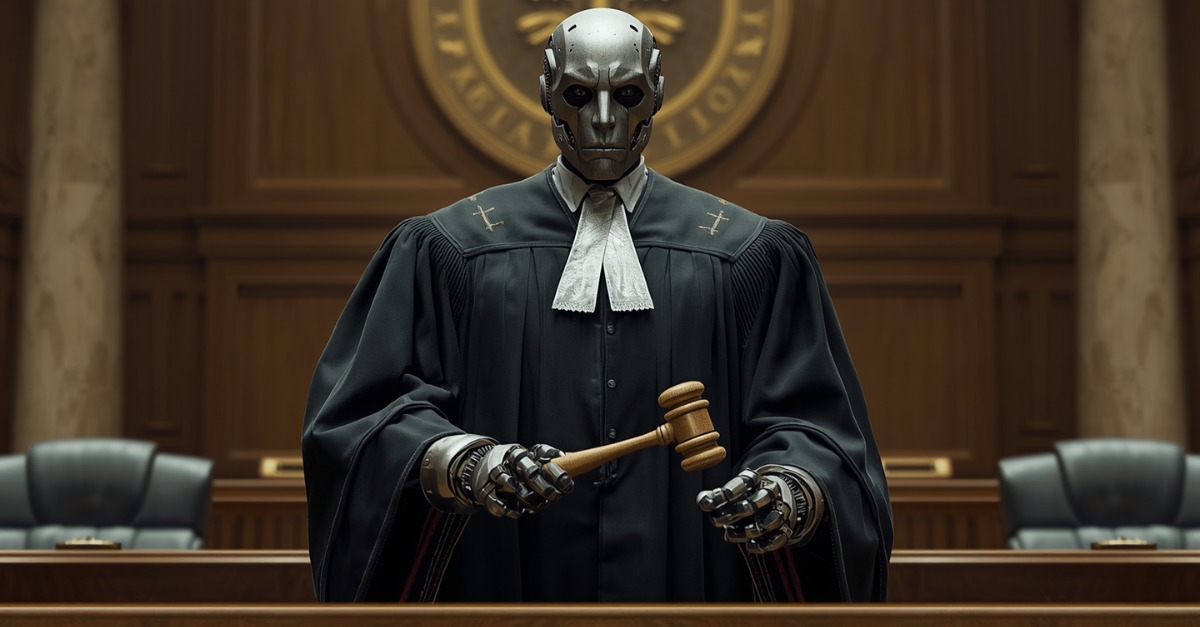
United States v. Heppner, No. 25-cr-00503-JSR (S.D.N.Y.)
Artificial Intelligence (AI) has forever changed the practice of law and will continue to reshape the legal landscape for the foreseeable future. As AI’s prevalence in legal practice grows, so does the need for lawyers to learn and understand AI tools so that they may be used properly, efficiently, and ethically. One particularly important consideration regarding the use of AI is its impact on attorney–client privilege and the work product doctrine. A recent case in the United States District Court of the Southern District of New York (SDNY) addressed just that question.
The Case
Whether AI-generated documents are protected by privilege was recently contemplated by the SDNY in United States v. Heppner. In this case, a white-collar criminal defendant used a generative AI tool before his arrest to create several documents relating to the government’s investigation, which he ultimately shared with his defense attorney. When the government arrested the defendant at his mansion, it confiscated electronic devices that had the AI-generated documents stored on them. The defendant’s counsel made clear to the Government that the documents were protected by the attorney-client privilege and the work product doctrine, and that the government could not view them. The government disagreed.
The attorney-client privilege “protects communications (1) between a client and his or her attorney (2) that are intended to be, and in fact were, kept confidential (3) for the purpose of obtaining or providing legal advice.” The work product doctrine protects “materials prepared by or at the behest of counsel in anticipation of litigation or for trial.” The government made three principal and independent arguments as to why the documents were not privileged. First, the government argued that AI-generated documents fail each element of the attorney-client privilege test because (a) the defendant communicated with an AI platform, not an attorney, (b) the documents were not made with the explicit goal of obtaining attorney advice, and (c) the documents and AI query inputs were not confidential because they contained information that the defendant voluntarily shared with a third party, the AI platform. Second, the government argued that the defendant could not retroactively cloak unprivileged documents by handing them to his or her attorney. Third, the government argued that the work product doctrine did not apply because the defendant created the documents on his own initiative, not at counsel’s behest or direction. This last point was contested by the defendant’s counsel, arguing that the work product doctrine does not require that the work product is done at the behest or direction of the attorney.
The Ruling
The Court found in the government’s favor, effectively ruling that documents prepared with AI are not privileged. The Court focused on the fact that the defendant had voluntarily shared private information with a third-party AI platform to which the defendant held no reasonable expectation of privacy, and therefore, the communications were not confidential. Additionally, the Court reasoned that the generation of these documents did not constitute communications between a client and an attorney, and that the communications were not for the purpose of obtaining legal advice from his attorney. In regards to the work product doctrine, the Court disagreed with the theory proffered by the defendant’s counsel, in part, because the AI-generated documents did not apparently reflect the litigation strategy of the defendant’s counsel, nor were they prepared at the behest of defense counsel.
Takeaways
This decision is one of the first of its kind, addressing privilege and the use of generative AI by litigants. There are several takeaways for both attorneys and litigants themselves. First, courts may see the use of generative AI as not confidential because AI tools generally share and process data from those uses, even if such data use is (purportedly) strictly for business purposes (to train and improve its models and inputs) and the data is not available to the public. Therefore, attorneys and clients should avoid putting information into AI model inputs, where that information would otherwise be protected by privilege. Attorneys must now counsel their clients of such risks. Second, the use of generative AI for the purposes of supplementing communications with an attorney may not be treated as communications with an attorney, but rather a third party, and are not protected. If a client prepares AI-generated documentation for the purpose of conveying information to their attorney, they risk losing privilege. Third, courts clearly see generative AI as distinct from other word-processing platforms like Microsoft Word and Google Docs. Whereas summaries prepared in Word or Docs could be protected, summaries generated by, or with the assistance of, AI may not. Fourth, courts may not apply the work product doctrine if AI-generated documents are not made at the direction of their counsel for the purposes of forming the attorney’s litigation strategy.
[1] United States v. Heppner, No. 25-cr-00503-JSR (S.D.N.Y.)
[2] United States v. Mejia, 655 F.3d 126, 132 (2d Cir. 2011).
[3] United States v. Heppner, No. 25-cr-00503-JSR (S.D.N.Y. Feb. 17, 2026), Dkt. No. 30 at 9 (internal citation omitted).
[4] United States v. Heppner, No. 25-cr-00503-JSR (S.D.N.Y. Feb. 17, 2026), Dkt. No. 30 at 5–7.
[5] United States v. Heppner, No. 25-cr-00503-JSR (S.D.N.Y. Feb. 17, 2026), Dkt. No. 30 at 8–9.
James E. Crossan of Liff, Walsh & Simmons is the head of the firm’s Commercial & Civil Litigation practice. He is experienced in all phases of litigation and has spent his entire legal career as a civil litigator. His litigation practice focuses on contract disputes, and he works directly with individuals and corporate entities in a wide range of civil matters, including construction, real estate, estates and trusts, and banking and finance.
Liff, Walsh and Simmons’ Commercial & Civil Litigation practice continually tracks developments in the field of litigation. If you need any assistance or if you have any further questions, please contact James E. Crossan, partner and head of the practice.