

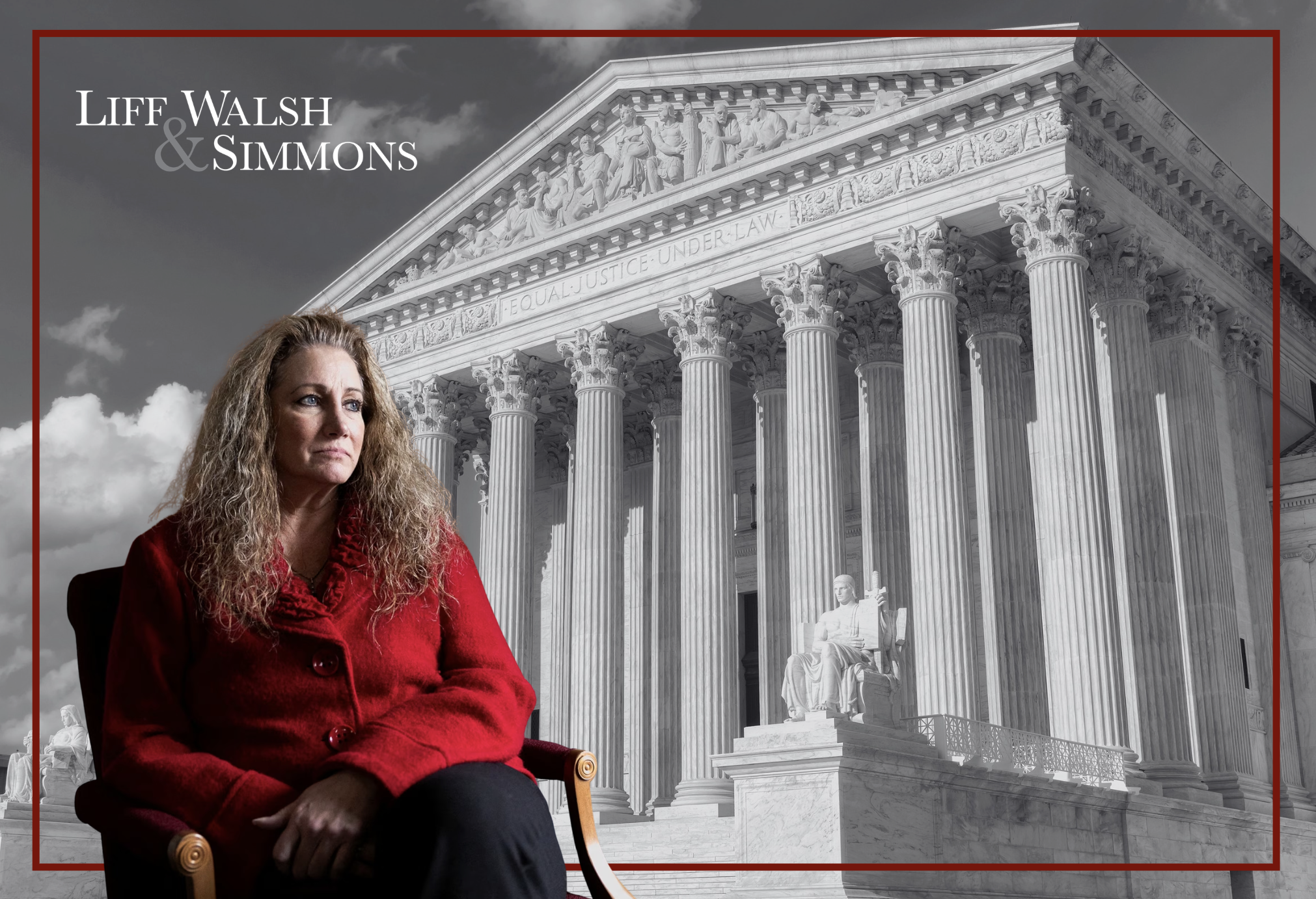
On June 5, 2025, the Supreme Court unanimously issued its decision in Ames v. Ohio Department of Youth Services, altering the employment landscape as it relates to discrimination claims asserted by individuals in a majority-group under Title VII. Prior to Ames, employees alleging employment discrimination under Title VII bore a higher burden of proof if they belonged to a “majority-group” — such as if the party was white, straight, and/or male. Based on this elevated evidentiary burden, this majority-group class practically faced an additional evidentiary hurdle in the workplace discrimination claims compared to their minority-group counterparts. Ames flattened this inequity of burden between classes. In Ames, the Supreme Court held that there is no majority-group/minority-group distinction in the context of Title VII claims, and in doing so, re-affirmed the concept that discrimination against an individual is treated equally across groups, regardless of whether that group belongs to a majority or a minority.
The Case
Ames was a straight woman working for the Ohio Department of Youth Services (the “Agency”) since 2004. Ames v. Ohio Dep’t. of Youth Serv’s., 605 U.S. 303, 306 (2025). In 2019, the Agency interviewed Ames for a promotion to a management position but ultimately selected a lesbian woman instead. Id. Mere days after her interview, Ames was removed from her current position, demoted, and replaced by a gay man in her previous position. Id. Ames then filed a lawsuit against the Agency under Title VII, alleging that she was discriminated against on the basis of her sexual orientation. Id. The lower courts held that, as a straight woman, Ames failed to show the requisite “background circumstances” that the Agency was an “unusual employer who discriminates against the majority.” Id. at 306-307. The “background circumstances” standard created a heightened evidentiary standard for majority-group plaintiffs to establish a prima facie case of discrimination as compared to minority-group plaintiffs.
The Supreme Court unanimously held that “the standard for proving disparate treatment under Title VII does not vary based on whether or not the plaintiff is a member of a majority group.” Id. at 309. Indeed, “Title VII’s disparate-treatment provision draws no distinctions between majority-group plaintiffs and minority-group plaintiffs.” Id. “By establishing the same protections for every “individual”—without regard to that individual’s membership in a minority or majority group—Congress left no room for courts to impose special requirements on majority-group plaintiffs alone.” Id. at 310. Thus, the appropriate analysis starts and ends with the statute, which prohibits disparate treatment on the basis of an individual’s race, color, religion, sex, or national origin, and does not change based on whether the individual is in a majority-group or a minority-group.
What This Means for You
After Ames, employers must recognize that all types of employees now enjoy the same standard for disparate treatment claims under Title VII, regardless of the employee’s status with any particular majority-group or minority-group. Ames made it easier for employees in majority-groups to establish prima facie claims of discrimination. Ames does not alter the analysis or burden for minority-groups – rather, it clarifies that the standard for proving a discrimination claim is the same for everyone. While this case specifically addresses Title VII disparate treatment claims, the ruling encourages strict statutory interpretation and discourages treating “majority” and “minority” groups differently. Therefore, it may be interpreted in the future to apply to other employment claims under similar federal statutes, like the FLSA and the FMLA.
Justice Thomas’s concurring opinion also hints at where the Court may go next. It noted that it is increasingly difficult to determine what a majority-group is, given the United States’ diverse landscape of individuals. Justice Thomas noted, for example, that women are the majority-group in certain professions, but the minority in others, and certain racial identities are more prominent in some geographic locations than others. Id. at 315-16. Using this logic, Justice Thomas questioned the practice of legally treating majority groups differently than minority groups. This concurrence, taken together with Students for Fair Admissions, Inc. v. President and Fellows of Harvard College, 600 U.S. 181, 206 (2023) (finding affirmative action programs unconstitutional in higher education), signal that the Court may be willing to consider the constitutionality of DEI hiring and employment programs. Employers should plan ahead and pay attention to the legality of such programs.
Richard J. Berwanger, Jr. of Liff, Walsh & Simmons is the firm’s head of the Labor and Employment and Legal Ethics practices and has years of experience in the field, advising both business entities and individuals of their rights and obligations under federal and state labor and employment laws. Individuals should know that there are less barriers to filing a disparate treatment claim under Title VII, without regard to whether their protected individual traits or characteristics are in a majority or minority group. Employers should be aware that any individual can bring such claims, and such claims will be examined under the same standard. Liff, Walsh & Simmons can help employees and employers navigate these constantly evolving and complex areas of law.
Liff, Walsh and Simmons’ Labor and Employment practice continually tracks labor and employment developments that may impact you or your business. For questions please contact Richard J. Berwanger, Jr., partner and head of the practice or Sean T. Sapp, associate.
This alert provides general information and is not a full analysis of the matters discussed. It may not be relied on as legal advice. Richard J. Berwanger, Jr., a Liff, Walsh & Simmons partner licensed to practice law in Maryland and the District of Columbia and Sean T. Sapp, a Liff, Walsh & Simmons associate licensed to practice law in the District of Columbia contributed to the content of this alert.