

Common Misconceptions About Entity Formation (and Why They Matter)
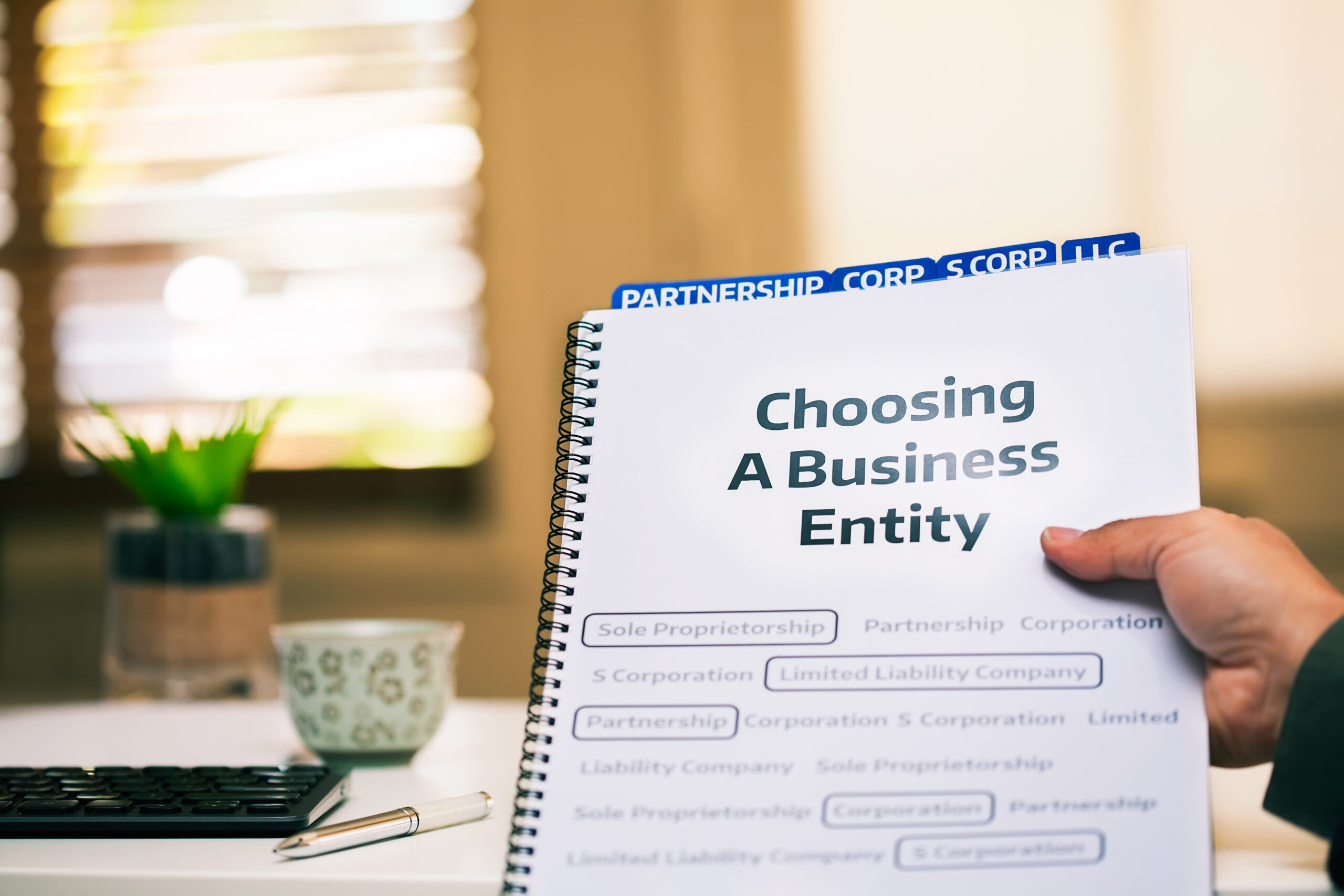
The article breaks down three frequent misunderstandings about entity formation and explains why one-size-fits-all advice often falls short. Before choosing or operating under a business structure, business owners should understand how the right entity can help protect personal assets, reduce avoidable costs, and support long-term growth.
There is a great deal of misinformation surrounding business formation, and following bad advice can leave small business owners unnecessarily exposed to liability. In some cases, personal assets may be at risk in a lawsuit. In others, business owners may incur avoidable costs, taxes, or administrative burdens. These misconceptions often arise when advice that is appropriate for a specific set of circumstances is treated as a universal rule. Below are some of the most common misunderstandings business owners have regarding entity liability and taxation.
Entity Formation Misconception 1:
Forming a business entity is a waste of both time and money.
Conducting business without forming an entity (like a corporation or limited liability company) can be one of the riskiest decisions an entrepreneur ever makes. Many small business owners may think that forming an entity is an overcomplicated formality only useful for large enterprises, but the complexity of the governing documents should generally reflect the complexity of the business. A business with many owners, investors, or revenue streams may require comprehensive provisions governing distributions, management, and ownership rights, but a smaller operation may be adequately served by a simpler set of documents. Filing the necessary documents to form an entity, and the ongoing costs to maintain the entity’s good standing with the state, only costs a few hundred dollars, which is a relatively low price for the liability protections an entity offers.
Business entities exist, in part, to separate business liabilities from an owner’s personal assets. Consider a plumbing business that was never operating as an entity. If one of the company’s plumbers negligently performs a job and causes substantial water damage to a customer’s home, the customer may sue the business owner personally. If the resulting judgment exceeds the owner’s available cash, the owner’s personal assets (like his home, vehicle, or bank accounts) may be at risk to satisfy the judgment. Now assume the same business was organized as an LLC. In most cases, the claim would be against the LLC rather than the owner individually. As a result, the owner’s liability is generally limited to the amount of their investment in the business. Assets owned by the LLC may be used to satisfy a judgment, but the owner’s personal assets typically remain protected. Even if the customer attempted to sue the owner of the LLC, the claim would likely be dismissed absent some other basis for imposing personal liability, as outlined below.
Entity Formation Misconception 2:
Forming a business entity insulates an owner from all personal liability.
As previously discussed, many people fail to appreciate that entities like LLCs or corporations provide meaningful liability protection. At the same time, others overstate the scope of that defense. Operating as a corporation or limited liability company can shield an owner from many claims arising in the ordinary course of business, but that liability protection is not absolute.
Individuals are generally responsible for harms that they cause. If the plumber was also the owner of the LLC in the plumbing example above, he could still be personally liable for the resulting damages because he personally performed the negligent work. Entity formation can protect a business owner’s personal assets from many business-related liabilities, including claims arising from an employee’s torts. It is not, however, a blanket shield against liability, especially for the owner’s own wrongful acts or misconduct.
Another important exception to limited liability is what is known as “piercing the veil.” To preserve the liability protection afforded by a business entity, an owner must respect the entity’s separate legal existence by complying with applicable corporate formalities, maintaining adequate records, and conducting the entity’s affairs in a manner that distinguishes it from their personal affairs. Essentially, when an owner disregards the legal distinctions between the entity and himself, he opens himself up to liability. If an owner doesn’t have a separate bank account and comingles his personal funds with the entity’s funds, a court may decide that the entity is not truly operating as a separate legal person and may hold the owner personally liable for the entity’s obligations. Courts will also pierce the veil if the entity was performed to perpetrate fraud or if it is purposely underfunded to avoid meeting its financial obligations. States grant limited liability protections to incentivize innovation and economic growth, not to provide bad faith actors with slush funds.
An owner can also become personally liable for a business’s obligations through a contractual guaranty. By signing a guaranty agreement, the owner agrees that if the business cannot meet its obligations, the owner will be personally responsible for those obligations, including payment or performance. There are several situations in which an owner may be required to personally guarantee the obligations of their entity, one common example being a commercial lease. Without an owner guaranty, many landlords will refuse to lease space to an entity. These guaranties only eliminate the liability shield with respect to the contracting party; they do not destroy it entirely. In other words, if a restaurant owner guarantees the entity’s lease of commercial space, he may be personally liable if the business defaults on its rent payments, but the owner’s personal assets would not automatically be exposed if a diner later brings a slip-and-fall claim against the restaurant.
Entity Formation Misconception 3:
The entity type dictates how the entity is taxed.
Many business owners assume that if they want their entity to be taxed a certain way, they must choose the legal entity form traditionally associated with that tax treatment and accept all of the governance, compliance, and administrative requirements that come with it. In reality, that assumption is often incorrect. An entity’s legal form and its tax classification are two separate concepts.
Generally speaking, business are taxed in one of two ways. Pass-through entities are not taxed at the entity level. Instead, profits and losses pass through to the owners, who report them on their individual tax returns and pay any resulting tax. By contrast, some entities are taxed at both the business and owner levels, which is commonly referred to as “double taxation.” First, the entity pays tax on its profits. Then, when those profits are distributed to the owners, the owners pay tax on the distributions they receive. Although the business has already paid tax on the income, the owners may also owe tax on the money they receive. Thus, the same earnings are taxed twice: once at the entity level and again at the owner level.
Typically, LLCs are pass-through entities and corporations are taxed at the entity level, but this is only a general rule. Entity type and tax classification are separate concepts. An LLC can elect to be taxed as a C corporation and be subject to double taxation. Likewise, a corporation that meets certain requirements can elect S corporation status and receive pass-through tax treatment. Which classification is most favorable can depend on the business’s ownership structure, expected profitability, reinvestment needs, and long-term growth plans.
In short, choosing the right business structure is not a formality; it is a foundational decision that affects liability exposure, tax treatment, and the long-term flexibility of the business. Many of the most common mistakes entrepreneurs make stem from oversimplified rules of thumb that do not account for the legal and financial realities of operating a business. While forming an entity is an important first step, it is only one part of a broader framework that includes proper governance, compliance, and informed tax planning. Investing in sound legal advice at the outset can help business owners avoid costly mistakes in entity formation and operation, often saving substantial time and expense that would otherwise be spent correcting problems later. Business owners who take the time to understand these distinctions early and establish the proper structure from the beginning are better positioned to protect their personal assets, avoid unnecessary costs, and build a business that supports sustainable growth.
Peter M. Shenouda, an Associate at Liff, Walsh & Simmons, is a member of the Banking & Finance, Business, and Real Estate practices. He supports clients across a broad range of regulatory, transactional, and compliance matters..
At Liff, Walsh & Simmons, our attorneys possess the wide array of skills necessary in today’s marketplace to navigate even the most complex business matters. Our clients benefit from our firm’s comprehensive set of service areas and cross disciplinary approach ensuring that our client’s interests are protected at all stages of the business lifecycle. Please contact Liff, Walsh & Simmons at 410-266-9500 to schedule a consultation.